MSN News WordPress Template
MUNICH, GERMANY – Donald Trump may have dropped immediate threats to seize Greenland, but could still wreak havoc in the Arctic, a regional leader has warned.
Last month, the US President threatened to seize Greenland from Denmark – refusing for a time to rule out doing so by force. Real-Time Flare-Gas Measurement for Compliance & Lower Costs

The incident threatened to implode the Nato military alliance – of which the US, Denmark and the UK are all members – shattering its foundational principle that members are united against common threats and revealing the dangers from within.
Further crisis appeared to have been averted when Nato announced a new Arctic mission, and Trump dropped his threats to the island.
But Arctic leaders have warned that the US President could still tear up the rulebook on the region.
Ólafur Ragnar Grímsson, chair of the non-profit network Arctic Circle, said that the Greenland incident was “definitely not over”.
“Greenland has, for more than half a century, been an integral part of [US defence]. The question is, however, whether those military requirements… will necessarily imply that America needs to get complete control of Greenland and bring it into the framework of the United States,” Grímsson told The i Paper at the Munich Security Conference.

“Nobody knows whether the American administration will come to the conclusion that it will be necessary for them to have complete sovereign control of Greenland. I am not quite sure whether Donald Trump has himself already made up his mind.”
Danish Prime Minister, Mette Frederiksen, also suggested that the Greenland incident was still live, saying that Trump’s desire to own the territory was “exactly the same” despite his apparent row back.
White House ‘should focus on threats at home’
Grímsson dismissed Trump’s claim – used to justify the US acquisition of Greenland – that there are Russian and Chinese vessels in the waters nearby as “sheer rubbish”. Two Nordic diplomats with sight of Nato briefings also dismissed the claims, according to Reuters.
Instead, Grímsson – former president of Iceland – said Trump should focus on security threats at America’s door.

“There are no, zero, Russian and Chinese vessels in Greenland waters. However, they are around Alaska. They are in the American Arctic. So if you are concerned with Russian and Chinese military presence in the Arctic, start at home,” he said.
The Arctic is vital for early warning from potential ballistic missile threats from Russia, while its seas are an important passage for Russian fleets heading to the West. The Kola Peninsula, in the extreme north-west of Russia, is where most of the Kremlin’s nuclear submarines are based and it has made several claims to Arctic waters.
Nordic leaders met on Wednesday to discuss elevating Greenland’s legal status, by updating the 1962 Helsinki Treaty to give full rights to the Danish-ruled territories of Greenland and the Faroe Islands, as well as Finland’s Aland.
“An update of the Helsinki Treaty will be a historic step and a future-proofing of Nordic cooperation,” Denmark’s minister for Nordic co-operation, Morten Dahlin, said.
Greenland’s foreign minister, Vivian Motzfeldt, said that the process would be “decisive in determining whether Greenland can be recognised as an equal partner in Nordic cooperation”.
The King of Denmark flew to Nuuk, Greenland’s capital, on Wednesday for a three-day visit, touring schools and factories.
Adam Lakhani, Security Director at International SOS who has spent time in Nuuk this week, also said the issue “does not feel resolved” for people in Greenland.
Whilst in the past week Greenland has dropped out of the headlines, there hasn’t been any indication US strategic interests have changed,” he said. “Although the messaging at Davos regarding Greenland was positive in the immediate term – that there would be no use of force – the speech delivered by Marco Rubio at Munich was a reiteration of the ‘old world order’ no longer existing.”
Trump threats ‘damaged US ties to Greenland’
Michael Sfraga, the former US ambassador to the Arctic, said that the US handling of the Greenland discussion had made the island’s population more hostile to American cooperation.
“One of the sad parts is that up until that rhetoric, the hearts and minds of Greenlanders really were with the United States. They have long ties to the country. These are one people from Canada to Greenland to the US. They speak the same language, they have the same culture,” Sfraga told The i Paper.
“But this kind of the rhetoric of invading a Nato nation or buying a native, buying another country, certainly has cooled those warm feelings that the Greenlandic population has had towards the United States.”
US officials were reportedly forced to go door to door to find locals willing to meet US Second Lady Usha Vance during her trip to the island last year with her husband, with the proposed three-day visit cut down to just one day.
Opinion polls indicated that Greenlanders overwhelmingly opposed becoming part of the US, with some putting the figure as high as 85 per cent.
However, Sfraga said he was “encouraged” by the more diplomatic tone taken by US Secretary of State Marco Rubio in Munich, as he celebrated Europeans as close allies and emphasised partnership.
To improve relations with the Arctic nation, Sfraga said the US should focus on investing in Greenland to expand its education system, research capabilities and “help them build a diversified economy, tourism, mining and critical minerals”.
“All of those things are not just nice to haves; you’re helping to build a civil society inside of inside of Greenland.”
“When you look at our relationships around the world, they’re not just about bases, they’re about tightening the bonds of democracy, of an international rules-based order.”
UK lagging behind on the Arctic
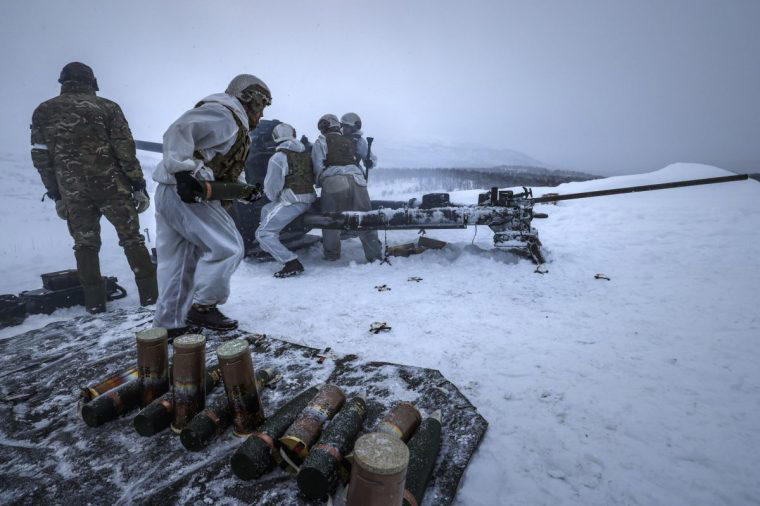
The number of British troops deployed to Norway is set to double over three years from 1,000 to 2,000, and UK personnel will play a “vital part” in Nato’s Arctic defence mission, the Ministry of Defence (MoD) said.
The UK will also join Exercise Lion Protector this September, in which air, land and naval forces will train to protect critical national infrastructure from attacks and bolster joint command and control capabilities.
The MoD said the projects will “enhance deterrence and defence in the Arctic, High North, and North Atlantic”.
But Arctic officials warned that countries including the UK were failing to invest enough in the region, with Grímsson saying that Whitehall has fallen behind allies in its Arctic engagement.
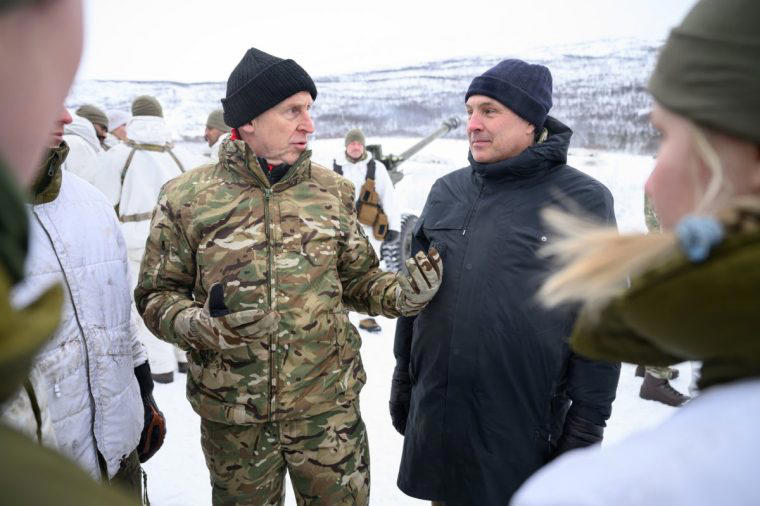
“The UK has not been doing enough. In fact, it has surprised me, as a great friend of the UK, how, compared to France and Germany, Poland and Italy, Japan, Korea, India, China, the government in Westminster and Whitehall has been more or less absent for this growing discussion and dialogue of engaged Arctic cooperation.”
He said the UK’s central Government had failed to engage with annual Arctic Circle assemblies, while Scotland had turned up to every one “presenting the case of Scotland”.
“If you look at the map, you see that the world north of the United Kingdom is this vibrant, growing, important Arctic territory where all the major powers of Asia and continental Europe are trying to establish a position,” Grímsson said.
The former Icelandic president suggested that previous British governments have been “too preoccupied” with relations in Europe and the Middle East and had “more or less ignored what has been happening north of Britain, where this new network of cooperation, economic importance, resources, security changes, as well as active political cooperation and dialog has been taking place”.
He added: “I think if Whitehall and Westminster are now waking up to the Arctic importance for the United Kingdom and the future enhancement of the role of the United Kingdom in the Arctic not just in terms of statements, but in real terms, that would be great news.”